








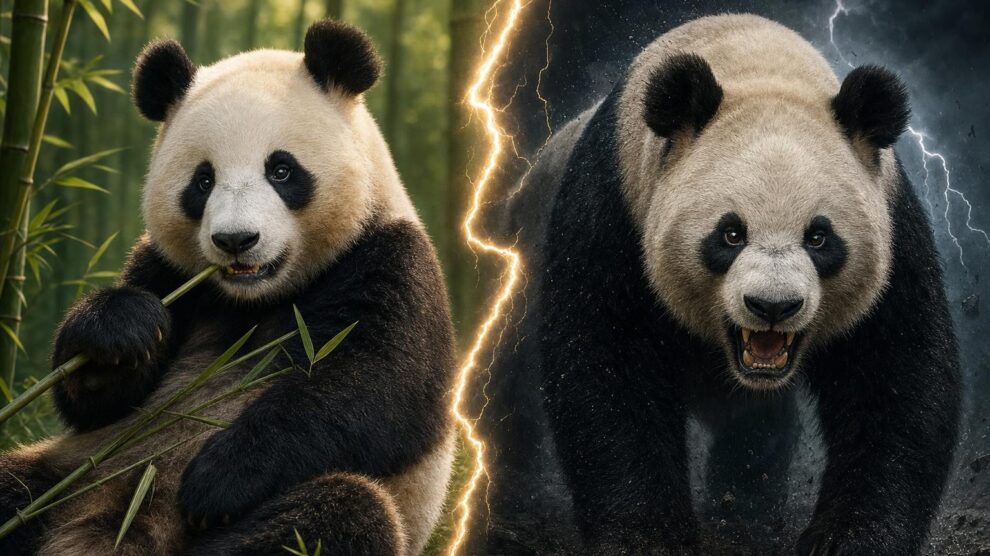
- Giant pandas are not naturally aggressive, but they are still wild bears capable of serious attacks when threatened, startled, or protecting their young.
- Pandas are significantly stronger than humans — their jaw muscles, bite force, and retractable claws make them genuinely dangerous despite their gentle appearance.
- Documented panda attacks have occurred, most notably at the Beijing Zoo, where multiple visitors who entered enclosures suffered severe injuries including near-severed limbs.
- Mother pandas are especially unpredictable — any bear, including the giant panda, becomes fiercely defensive when cubs are nearby.
- Captive pandas can form bonds with handlers, but even experienced zookeepers maintain strict safety protocols — keep reading to find out exactly what triggers a panda to attack.
That black-and-white bear rolling around munching bamboo looks like the world’s most harmless animal — but looks are wildly deceiving.
Giant pandas have captured hearts globally with their round faces, clumsy tumbling, and seemingly easygoing nature. But beneath that plushy exterior is a powerful bear with strong jaws, sharp retractable claws, and the instincts of a wild predator. Understanding what pandas are really like — beyond the viral zoo videos — matters both for safety and for a genuine appreciation of these remarkable animals. For anyone curious about the real behavior of wildlife, exploring trusted animal behavior resources is always a smart starting point.
Pandas Are Not the Cuddly Pets They Appear to Be
The giant panda (Ailuropoda melanoleuca) is a bear — and that fact alone should reframe how we think about them. Like all bears, pandas are built for survival. Their stocky bodies, powerful limbs, and crushing bite force are biological tools shaped by millions of years of evolution, not props for tourist photos.
Most people’s mental image of a panda comes from zoo enclosures and wildlife documentaries carefully filmed at a safe distance. In reality, wild pandas are solitary, territorial animals that actively avoid human contact. That avoidance is often mistaken for friendliness. It isn’t. It’s indifference — and indifference can turn fast. To learn more about panda behavior, check out are pandas dangerous?
Are Pandas Naturally Aggressive?
Pandas are not naturally aggressive in the way a cornered wolf or a territorial hippo might be. In the wild, their first instinct when encountering humans is typically to retreat. However, that does not make them safe. Aggression in pandas is situational — and when it happens, it is fast and serious.
How Pandas Behave When Threatened
When a giant panda feels cornered, surprised, or provoked, it does not bluff. It acts. Unlike some animals that go through elaborate warning displays before attacking, pandas can move from calm to aggressive quickly. They use their powerful jaws and claws as primary weapons, and a panda bite is not something that ends with a minor wound.
Panda Aggression Toward Other Pandas
Pandas are not social animals — they are largely solitary in the wild and do not welcome the company of other pandas outside of brief mating seasons. Male pandas will fight each other aggressively over territory and mating rights. In one documented case from 2007, a male giant panda that had been born in captivity and released into the wild was killed in a fight with wild pandas shortly after his release — a stark reminder that panda-on-panda aggression is very real.
Why Mother Pandas Are Especially Dangerous
Any wildlife professional will tell you the same thing: never get between a mother bear and her cubs. Giant pandas are no exception. A mother panda is fiercely protective of her offspring and will attack without hesitation if she perceives any threat — human or animal — getting too close. This maternal aggression is instinctive, powerful, and requires zero provocation beyond simple proximity.
How Strong Is a Giant Panda?
People consistently underestimate panda strength because of how they look. The reality is that a giant panda is substantially stronger than the average adult human, and their physical capabilities make them genuinely formidable.
Bite Force and Physical Capabilities
The giant panda’s jaw muscles are among the most powerful of any land mammal relative to its skull size. Their teeth — particularly the large, flat molars — are designed to crush dense bamboo stalks daily, which requires extraordinary force. Those same teeth can cause catastrophic damage to human tissue. Pandas also possess retractable claws that can slice through skin with ease, adding another layer of danger that their fluffy appearance completely masks.
How Panda Strength Compares to Other Bears
While pandas are generally considered less aggressive than grizzly bears or polar bears, their physical strength is not dramatically lower. Adult giant pandas typically weigh between 150 to 280 pounds and are built with dense muscle mass. Their biting capabilities, in particular, rival that of much larger predators. Compared to a black bear — which most people already treat with great caution — a giant panda is in the same physical league.
Would a Panda Actually Attack a Human?
Yes — and it has happened more than once. While unprovoked attacks on humans are rare, pandas have attacked people who wandered too close, accidentally fell into enclosures, or simply startled them. The attacks that have occurred were not minor incidents. They were severe, requiring significant medical attention.
Documented Panda Attacks on Humans
The Beijing Zoo has documented multiple cases of panda attacks on humans. In several incidents, visitors who entered or fell into panda enclosures suffered ferocious bites that nearly severed limbs. These were not warning nips — they were full-force attacks from an animal with one of the most powerful bites in the bear family. There are no clearly confirmed cases of a giant panda killing a human, but the injuries sustained in documented attacks make it clear that the potential is there.
What Triggers a Panda Attack
Pandas are most likely to attack when they feel cornered, surprised, or threatened. Getting too close to a mother with cubs is one of the fastest ways to trigger an aggressive response. Sudden movements, loud noises, and invading their personal space — especially in the wild — can all push a panda from calm to dangerous within seconds. The common thread in most documented attacks is a human underestimating the animal because of its appearance.
Can Pandas Bond With Humans?
Captive pandas, particularly those raised from birth in zoo or sanctuary environments, can develop recognizable relationships with their human handlers. But “bond” needs to be understood carefully here — it is not the same kind of bond a dog forms with its owner.
How Pandas Interact With Their Keepers
Experienced panda keepers at facilities like the Chengdu Research Base of Giant Panda Breeding report that individual pandas have distinct personalities. Some are more tolerant of human presence, others more standoffish. Over time, pandas can become comfortable enough with specific handlers to allow close interaction, including veterinary care and feeding routines.
However, even the most experienced handlers never treat their pandas as tame. Strict safety protocols remain in place at all times. Keepers are trained to read body language signals — flattened ears, stiff posture, lowered head — that indicate a panda is becoming agitated. The relationship is built on respect for the animal’s wild nature, not an assumption of domesticity.
Panda Behavior in Captivity vs. The Wild
Captive-born pandas that have spent their entire lives around humans are noticeably more tolerant of human presence than their wild counterparts. Wild giant pandas actively avoid humans and will flee if given the opportunity. The 2007 case of a captive-born panda released into the wild — who was killed by wild pandas shortly after — also highlights how profoundly different captive and wild panda behavior can be. Captivity changes behavior, but it does not change biology.
How to Stay Safe Around Pandas
Whether you are visiting a zoo, a wildlife sanctuary, or trekking through the bamboo forests of Sichuan, China, the rules for staying safe around giant pandas are straightforward — and non-negotiable.
1. Never Approach a Panda in the Wild
Wild giant pandas are extremely rare and a sighting would be remarkable — but it is not an invitation to get closer. If you ever encounter a giant panda in the wild, the correct response is to stay still, avoid sudden movements, and slowly create distance between yourself and the animal. Do not attempt to photograph from close range, do not make loud noises, and absolutely do not attempt to touch or feed it.
- Stay at least 100 meters away from any wild panda sighting
- Do not block the panda’s escape route
- Avoid direct eye contact, which can be perceived as a threat
- Back away slowly — never run
- If cubs are visible, increase your distance immediately
Running triggers a chase instinct in most large predators and bears are no exception. A giant panda can move faster than most people expect for an animal of its size, so distance — not speed — is your best protection.
The same logic applies in zoo environments. Barriers exist for a reason. No photograph, no matter how incredible, is worth crossing into a panda enclosure. The documented attacks at the Beijing Zoo all involved humans crossing safety boundaries — and every single one resulted in serious injury.
2. Keep Distance From Mother Pandas and Cubs
If there is one rule that overrides all others, it is this: never approach a mother panda with cubs. Maternal instinct in giant pandas is powerful and instantaneous. A mother panda does not issue warnings — she reacts. Even in captivity, handlers give mother pandas significantly more space during cub-rearing periods and adjust their protocols accordingly.
Giant panda cubs are born incredibly small and vulnerable — at birth they weigh only around 3 to 5 ounces — which makes the mother’s protective instincts even more intense. That fierce protectiveness does not diminish as the cub grows. Until a cub is fully independent, the mother remains on high alert, and any perceived threat will be met with immediate aggression.
3. Follow Zoo and Sanctuary Safety Rules
Every accredited zoo and panda sanctuary has safety protocols in place for a reason — they are written from experience, often hard-earned. Barriers, designated viewing distances, and restricted access zones are not suggestions. When visiting any facility that houses giant pandas, follow staff instructions without exception, stay behind all barriers, and never attempt to reach into or enter any enclosure.
Photography is one of the most common reasons people push boundaries around captive animals. The instinct to get a better shot can override common sense quickly. No zoo selfie is worth a panda bite. Keep your camera zoom and your feet firmly on the safe side of every barrier.
If a panda at a zoo or sanctuary appears agitated — watch for flattened ears, a lowered head, or stiff, deliberate movement — alert a staff member immediately and move away from the enclosure. These are not subtle signals. Pandas communicate discomfort clearly to those who know what to look for, and respecting those signals is the single most effective safety measure available to visitors.
Pandas Are Fascinating — But Always Wild Animals
Giant pandas are extraordinary animals — rare, complex, and genuinely remarkable to observe. But their cuteness is a biological coincidence, not a personality trait. Respecting pandas means understanding what they actually are: powerful wild bears with sharp instincts, incredible physical strength, and zero obligation to be friendly. Admire them from a distance, learn about them deeply, and you will appreciate them far more than any misguided attempt to get close ever could.
Frequently Asked Questions
Here are answers to the most common questions people have about panda behavior and safety.
Are giant pandas dangerous to humans?
Yes, giant pandas can be dangerous to humans. While they are not naturally aggressive and typically avoid confrontation, they are physically powerful animals with strong jaws, sharp retractable claws, and the instincts of a wild bear.
When threatened, cornered, or surprised, a giant panda can attack quickly and with significant force. Documented attacks — particularly at the Beijing Zoo — have resulted in severe injuries, including wounds serious enough to nearly sever limbs. Treat them with the same caution you would any large bear.
Have pandas ever killed a human?
There are no clearly documented cases of a giant panda killing a human. However, the attacks that have occurred have caused extremely serious injuries. The absence of a confirmed fatality does not mean pandas are safe to approach — the physical capability to cause fatal injury is absolutely present.
Do pandas like being pet or held?
Wild pandas do not tolerate being touched by humans at all. Captive-born pandas raised around human handlers can become accustomed to close contact during veterinary and care routines, but this is the result of years of careful, professional relationship-building — not an indication that pandas enjoy physical affection the way domestic animals do.
Some tourist experiences in China have historically allowed visitors to hold panda cubs under highly controlled conditions. However, animal welfare organizations have raised significant concerns about the stress these interactions cause to the animals. Most reputable conservation facilities have moved away from direct public contact programs in favor of protected-contact management, where barriers always remain between humans and pandas.
Are pandas friendlier than other bears?
Compared to bears like grizzlies or polar bears, giant pandas are generally less predatory in their behavior toward humans — largely because their diet is almost entirely bamboo, which means they do not associate humans with food the way some omnivorous bears do. This dietary difference reduces one major trigger of bear aggression.
That said, “less aggressive than a grizzly” is not the same as “friendly.” Giant pandas still possess the physical tools and instincts of a bear. Their aggression is triggered by threat and territory rather than hunger, but that does not make an encounter with an agitated panda any less dangerous.
Bear Species Typical Aggression Level Primary Trigger Danger to Humans Giant Panda Low to Moderate Threat, surprise, cubs Moderate — serious injury possible American Black Bear Low to Moderate Food, surprise, cubs Moderate — attacks occur regularly Grizzly Bear High Territory, food, cubs High — fatalities documented Polar Bear Very High Predatory, hunger Very High — apex predator behavior
Why do pandas look friendly if they are not?
The giant panda’s appearance triggers something deeply hardwired in the human brain. Their large, round heads, small noses, and forward-facing eyes closely mimic the proportions of a human infant’s face — a phenomenon researchers refer to as the “baby schema” effect. This set of features instinctively activates nurturing responses in humans, making us perceive the animal as cute, harmless, and approachable.
Evolution shaped the panda’s appearance for reasons entirely unrelated to human perception. Those round cheeks are actually massive jaw muscles. That slow, rolling walk conserves energy for a diet that provides very little of it. Every physical feature that reads as “adorable” to us has a purely functional purpose for the panda.
The gap between how pandas look and what they are is one of the most important lessons in wildlife awareness. Appearance is never a reliable indicator of danger. The animals most responsible for human injuries worldwide — hippos, cassowaries, and yes, giant pandas — are frequently underestimated for exactly this reason. Respect the animal, not the image.